Professor Ian Brighthope Substack - Medicare and the 'Medical Cabal' has failed you Australia.
Jul 16, 2026
https://substack.com/home/post/p-207248039
Jul 17, 2026
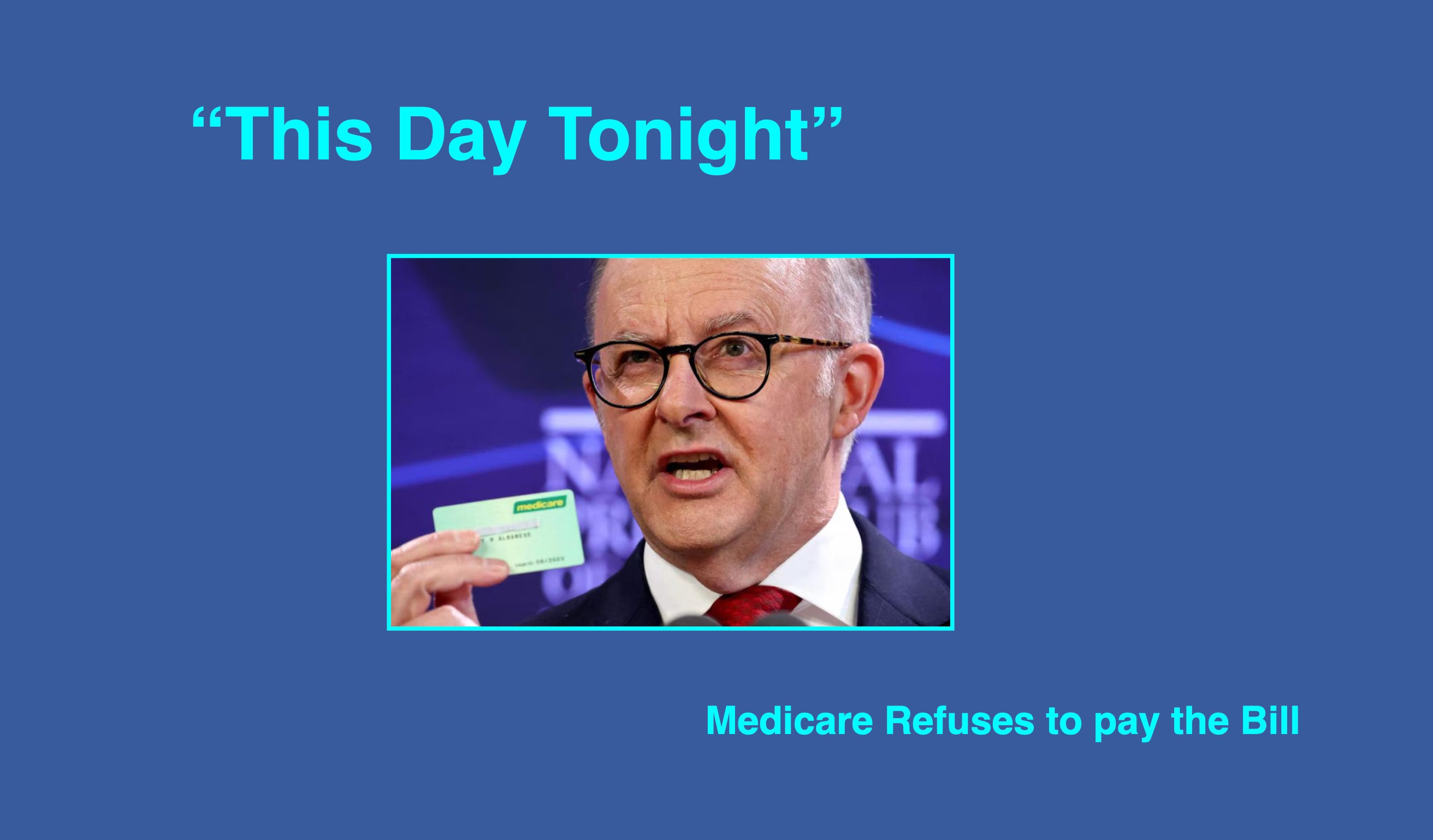
I have reached a disturbing conclusion.
Australia has not built a genuine healthcare system. It has built a disease-management machine. I see a system that waits for people to become sick, divides their illnesses into billable fragments, sends them from one waiting room to another, prescribes something, scans something, cuts something and then congratulates itself for treating the damage it failed to prevent.
This is the truth I believe Australians are not supposed to say aloud:
Medicare and the medical establishment have failed you.
I am not saying that every doctor, nurse, pharmacist or health practitioner has failed. Many are decent, compassionate and exhausted people trapped inside a dysfunctional structure. But I believe the structure itself is failing.
I see the government funding the machinery.
I see the Australian Medical Association protecting the profession.
I see medical schools reproducing the prevailing ideology.
I see specialist colleges guarding their territories.
I see the Medical Board defining acceptable conduct.
I see Ahpra investigating those who step outside approved boundaries.
Each institution insists it is protecting the public. Yet I see the public growing sicker.
I see more Australians living with chronic disease.
I see hospitals congested and mental-health services overwhelmed,
I see rural communities struggling to attract doctors.
I see elderly patients waiting in pain for surgery.
I see general practitioners forced into rushed, transactional medicine.
I see preventable hospitalisations consuming beds, money and lives.
And still the circus performs.
Everyone applauds their own importance, Meanwhile, patients wait, deteriorate and die.
I do not believe Medicare is healthcare. It is primarily a payment system. It pays when something happens such as A consultation. A blood test, A scan. A procedure. A prescription. A hospital admission.
I see a system that rewards activity but does not reliably reward health.
A doctor can be paid repeatedly to see a patient whose diabetes remains uncontrolled.
The hospital can be paid when that patient develops an infected foot. The surgeon can be paid if an amputation is required. The rehabilitation service can be paid afterwards.
But I ask: where was the properly funded and coordinated program that might have prevented the catastrophe? Where was the time to address nutrition, obesity, sleep, medication adherence, social isolation, alcohol use, depression and exercise? Where was the team? Where was the follow-up? Where was the person responsible for the whole patient? Nowhere.
The transaction was funded. The outcome belonged to nobody. This is why I believe Australia continues to experience enormous numbers of potentially preventable hospitalisations.
I see children whose asthma becomes an emergency.
I see elderly patients whose heart failure deteriorates unnoticed.
I see diabetic infections treated too late.
I see people with chronic lung disease unable to obtain timely primary care.
Then for all good reasons the ambulance arrives. The emergency department takes over. The hospital bed is occupied. The drugs, imaging and procedures begin. The system fails at prevention and then celebrates the rescue.
I do not call that healthcare. I call it expensive damage control.
The Commonwealth and state governments have known for decades that the population is ageing, chronic disease is rising, mental-health demand is increasing and rural healthcare is deteriorating.
None of this was unexpected.
I also see governments hiding behind divided responsibility.
But I know the patient does not care which level of government owns which part of the failure.
The patient has one body. One illness. One life. The bureaucracy is fragmented. The suffering is not.
I acknowledge that the Australian Medical Association has often done valuable work. It has exposed hospital overcrowding, workforce pressure and government underfunding. It has defended doctors working under increasingly difficult conditions.
But I also recognise that the AMA is not only a public-health organisation. It represents doctors and protects their authority, remuneration and professional jurisdiction. Those interests often overlap with the public interest. They do not always coincide. This was clearly the case of the covid-19 mandates and in particular the forced vaccinations.
I believe the AMA is right to defend standards of training, competence and safety. But it must stop pretending that every defence of medical territory is automatically a defence of patients.
When properly trained nurse practitioners, pharmacists, dietitians, physiotherapists, psychologists or other professionals can safely provide defined services, I believe the central question should be simple: Will patients receive safer, faster and better care? The answer should not be determined by professional ownership.
I want the AMA to lead a transformation toward genuine multidisciplinary medicine. Too often, however, I see it acting as the senior gatekeeper of the existing hierarchy. I see it demanding more resources for the same model while resisting the redistribution of responsibility needed to make the system function.
I do not want doctors reduced to prescription clerks. Nor do I want other health professionals treated as decorative additions around the medical centre. I want teams in which the most appropriate practitioner provides the most appropriate care. Professional prestige must never take priority over patient access.
I know medical schools produce intelligent and hardworking graduates. But I believe their education remains heavily focused on diagnosing and treating established disease. Students learn how to treat diabetes. I ask how much they learn about helping patients prevent or reverse metabolic deterioration. They learn how to treat heart attacks. I ask how much practical training they receive in sustained cardiovascular prevention. They learn pharmacology in depth. I ask how much they learn about nutrition, exercise, sleep, environmental exposure, social isolation, deprescribing and behavioral change.
I am not arguing that drugs and surgery are unimportant. They are essential. My concern is that the rest of human health is too often treated as secondary. I believe medical students should also be taught that consensus is not infallible. Guidelines are not commandments. Published evidence may be affected by commercial interests, selective reporting, surrogate endpoints, ghostwriting and conflicts of interest.
That does not mean all medicine is corrupt. It means doctors must be trained to think critically. Science advances because people question prevailing assumptions. When a medical school trains students merely to repeat approved conclusions without understanding how those conclusions were reached, I do not believe it is producing independent scientists.
I believe it is producing compliant technicians.
I accept the need for strong professional regulation. Patients must be protected from fraud, abuse, exploitation, incompetence and reckless treatment. But I see a profound difference between protecting patients from genuine harm and enforcing professional conformity. A doctor who deceives patients should be disciplined. A doctor who fabricates evidence should be disciplined. A doctor who behaves recklessly should be disciplined.
But I do not believe that a doctor who expresses a reasoned minority opinion is automatically dangerous.
When a practitioner discusses an unconventional treatment honestly, explains uncertainty, discloses risks and respects informed consent, I do not believe unconventional thinking should itself be treated as misconduct. The proper standard is not whether a treatment is conventional.
I believe the proper questions are these: Was the patient misled? Were the risks disclosed? Were the alternatives explained? Was consent voluntary? Was the practitioner competent? Was the treatment proportionate to the evidence? Those principles should apply equally to pharmaceuticals, surgery, devices, complementary treatments and decisions to provide no treatment.
I also believe an Ahpra investigation can itself become a form of punishment. Months or years of uncertainty can damage reputations, finances, health and careers before any final finding is made. Immediate restrictions may sometimes be necessary to protect the public. But I do not believe immediate action should become indefinite punishment without a timely hearing and proper determination. Nor should regulators become instruments for ideological complaints, professional vendettas or politically motivated attempts to silence lawful speech.
I do not believe the public is safer when competent doctors become afraid to ask questions.
COVID did not create these problems. I believe it revealed them. I watched governments, professional organisations, universities and regulators frequently speak with one voice. I saw uncertainty flattened. I saw dissent treated as disloyalty. I saw public trust demanded rather than earned.
I accept that emergency conditions may require urgent decisions. But I do not accept that they justify permanent immunity from scrutiny. I believe Australians are entitled to an independent examination of modelling, mandates, procurement, hospital restrictions, delayed treatment, mental-health harms, school closures and censorship.
The institutions that designed and enforced policies should not be the only institutions permitted to judge them.
I do not believe the architect should always be the investigator.
I do not want Medicare destroyed. I want it transformed. I want funding to reward continuity, prevention, complexity and outcomes - not merely throughput. I want every Australian to have access to a regular primary-care team. I want dental care recognised as part of the body. I want mental-health treatment available before crisis. I want permanent rural services instead of temporary political promises. I want medical schools to teach prevention, nutrition and scientific humility. I want the AMA to distinguish patient advocacy from professional self-interest. I want Ahpra and the Medical Board to protect the public without policing responsible thought. I want governments to report not merely how much money they spent, but how much health that expenditure produced.
Australians have paid generously for this system. They have trusted it. They have waited. They have complied. They have accepted delay, fragmentation and rising costs. I believe they are entitled to demand more. I believe the medical establishment has taken the wrong path. It has mistaken treatment for health. Activity for achievement. Compliance for science. Procedure for progress.
I do not believe the purpose of healthcare is to manage your decline while processing the paperwork. I believe the purpose of healthcare is to keep you well.
Until that principle governs Medicare, government, medical education, professional leadership and regulation, I believe the circus will continue. The government will announce. The AMA will negotiate. The universities will credential. The Medical Board will define. Ahpra will investigate. The hospitals will overflow. Medicare will process the claim.
And Australians will continue to become unnecessarily ill and die prematurely early while every institution insists it has done its job.